

![[Andalusi-era] US Yale Arabic MSS suppl. 598 — Qiṣṣat futūḥ Ifrīqīyah, al-Sifr 1 (Conquest of Nor p.1 — Maghreb (sanity-test Yale Qiṣṣat futūḥ Ifrīqīya)](https://andalusianarchive.com/images/iiif/3/8597!807985.jpg/full/!640,800/0/default.jpg)
![[Andalusi-era] BL Papyrus 3124 — Bilingual Latin-Arabic private letter (Egypt, post-conquest era) p.1 — Mediterranean (sanity-test BL Papyrus 3124 bilingual letter)](https://andalusianarchive.com/images/iiif/3/8598!807986.jpg/full/!640,800/0/default.jpg)
![[Andalusi-era] BnF btv1b6000547t — al-Idrīsī — Nuzhat al-Mushtāq (BnF Arabe 2221) p.1 — med-basin (1.D al-Idrīsī)](https://andalusianarchive.com/images/iiif/3/8602!808723.jpg/full/!640,800/0/default.jpg)
![[Andalusi-era] BnF btv1b6000547t — al-Idrīsī — Nuzhat al-Mushtāq (BnF Arabe 2221) p.2 — med-basin (1.D al-Idrīsī)](https://andalusianarchive.com/images/iiif/3/8603!808724.jpg/full/!640,800/0/default.jpg)
![[Andalusi-era] BnF btv1b6000547t — al-Idrīsī — Nuzhat al-Mushtāq (BnF Arabe 2221) p.3 — med-basin (1.D al-Idrīsī)](https://andalusianarchive.com/images/iiif/3/8604!808726.jpg/full/!640,800/0/default.jpg)
![[Andalusi-era] BnF btv1b6000547t — al-Idrīsī — Nuzhat al-Mushtāq (BnF Arabe 2221) p.4 — med-basin (1.D al-Idrīsī)](https://andalusianarchive.com/images/iiif/3/8605!808727.jpg/full/!640,800/0/default.jpg)
![[Andalusi-era] BnF btv1b6000547t — al-Idrīsī — Nuzhat al-Mushtāq (BnF Arabe 2221) p.5 — med-basin (1.D al-Idrīsī)](https://andalusianarchive.com/images/iiif/3/8606!808728.jpg/full/!640,800/0/default.jpg)
![[Andalusi-era] BnF btv1b6000547t — al-Idrīsī — Nuzhat al-Mushtāq (BnF Arabe 2221) p.6 — med-basin (1.D al-Idrīsī)](https://andalusianarchive.com/images/iiif/3/8607!808729.jpg/full/!640,800/0/default.jpg)
![[Andalusi-era] BnF btv1b6000547t — al-Idrīsī — Nuzhat al-Mushtāq (BnF Arabe 2221) p.7 — med-basin (1.D al-Idrīsī)](https://andalusianarchive.com/images/iiif/3/8608!808730.jpg/full/!640,800/0/default.jpg)
![[Andalusi-era] BnF btv1b6000547t — al-Idrīsī — Nuzhat al-Mushtāq (BnF Arabe 2221) p.8 — med-basin (1.D al-Idrīsī)](https://andalusianarchive.com/images/iiif/3/8609!808731.jpg/full/!640,800/0/default.jpg)
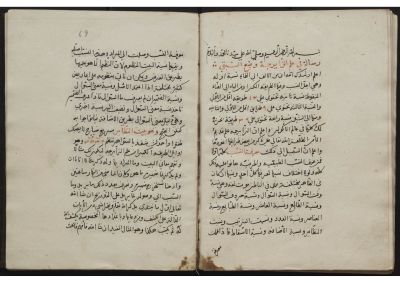
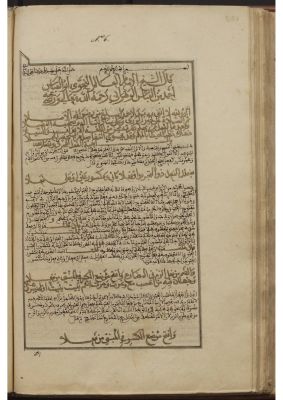
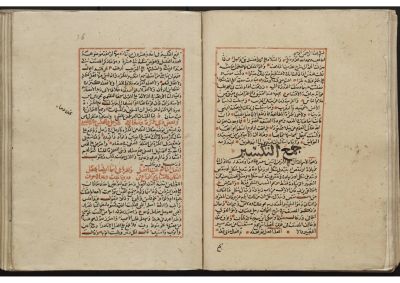
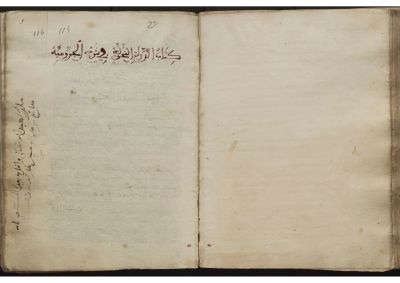
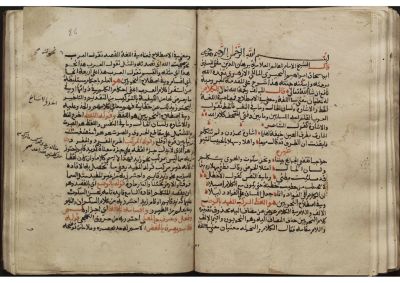
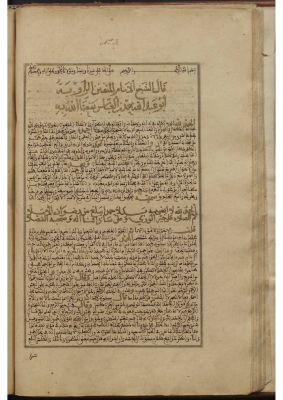
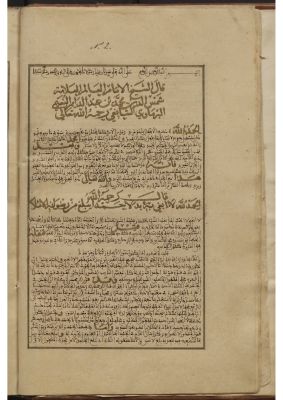
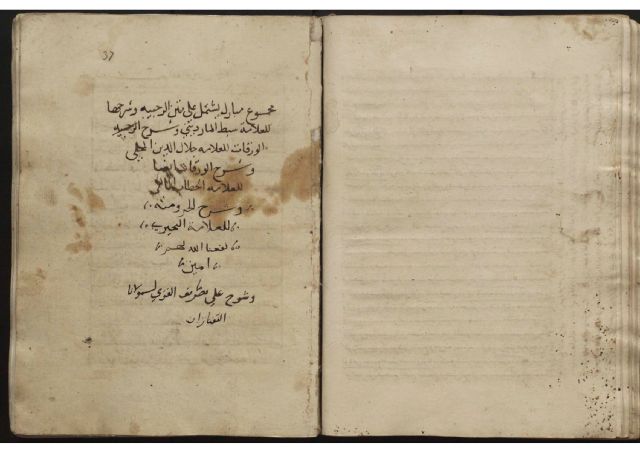
Folio I
al-Waraqāt
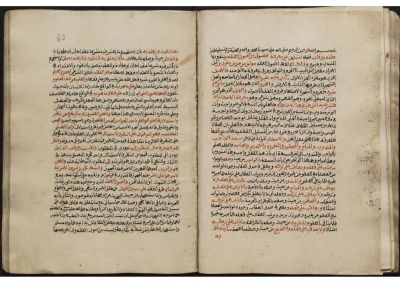
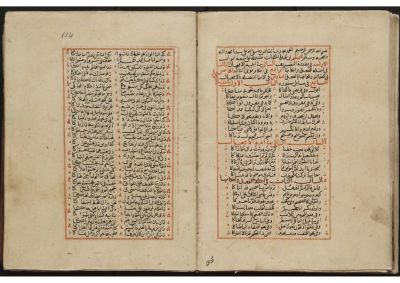
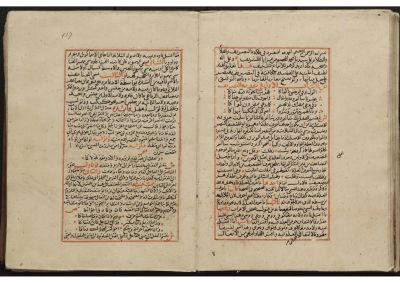
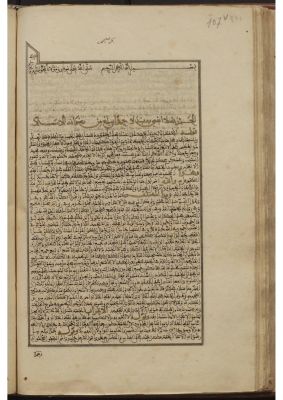
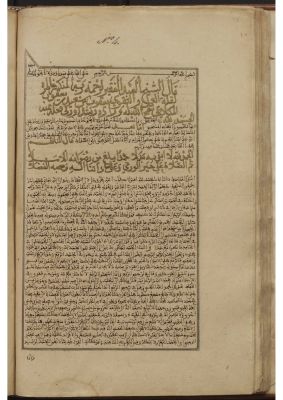
Identified as Al-Waraqāt by Imām al-Ḥaramayn al-Juwaynī (d. 478 AH / 1085 CE), or a close commentary thereon.
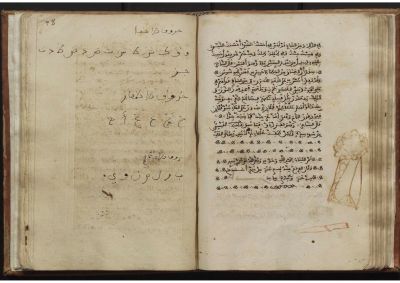
Eight lines, hand-glossed against the corrected transcription. Each citation is anchored to the verse, ḥadīth, or classical source the copyist quotes.
-
أقيموا الصلاة
“Establish the prayer.”
Qur'an 2:43 -
لا تقربوا الزنا
“Do not come near to fornication.”
Qur'an 17:32 — Sūrat al-Isrāʾ -
قياس الأرز على البر في امتناع بيع بعضه ببعض إلا مثلاً بمثل يداً بيد
Analogical reasoning: rice judged like wheat — both fall under the prohibition of unequal exchange (ribā al-faḍl).
Ḥadīth — Ṣaḥīḥ Muslim, on ribā -
والفقه: معرفة الأحكام الشرعية التي طريقها الاجتهاد
“Fiqh is knowledge of the legal rulings whose path is independent reasoning (ijtihād).”
Al-Waraqāt -
هذه وريقات قليلة تشتمل على معرفة فصول من أصول الفقه ينتفع بها
“These are a few small leaves containing the chapters of the principles of jurisprudence…” — the celebrated opening of al-Waraqāt.
Al-Waraqāt -
وإذا حللتم فاصطادوا
“And when you are released from pilgrim sanctity, then [you may] hunt.”
Qur'an 5:2 — Sūrat al-Māʾida -
واسأل القرية أي أهل القرية
“Ask the town” (i.e. ‘the people of the town’ — metonymy).
Qur'an 12:82 — Sūrat Yūsuf -
إلى الذهن قصداً لا إلى الخارج. والمجاز بالاستعارة كقوله تعالى: {جِدَارًا يُرِيدُ أَن يَنقَضَّ}
“…a wall on the verge of collapsing.” (lit. ‘a wall that wants to fall’)
Qur'an 18:77 — Sūrat al-Kahf