Andalusian Digital Archive الأرشيف الأندلسي الرقمي

The reading rooms

Special collections

Curated gateways into the holdings of nine major libraries, museums and archives. Each collection has its own history, its own conventions and its own way of being read — choose a reading room and step in.

Most collections are fully open. A few — formed under partner agreement with the holding institution — are reserved for credentialed researchers, with the agreement of the curators on both sides.

Orientalism — Description de l'Égypte & Companions

Orientalism — Description de l'Égypte & Companions

Nineteenth-century European scholarship on al-Andalus and the Maghrib: the Napoleonic Description de l'Égypte, the founding histories of Reinhart Dozy, and the BibAlex DAF and Internet Archive corpora that made these works the canon for the Arab-language history written in Europe between 1810 and 1900.

427 manuscripts · 122,307 folios

Open the collection →
Andalusi Photography & Art

Andalusi Photography & Art

Photographs, lithographs and engravings of al-Andalus and the Maghrib — Charles Clifford's 1850s Alhambra and Toledo, the prints of David Roberts and Owen Jones, Cleveland's Tiraz of ʿAbd al-Raḥmān III, and works held at the Met, the National Gallery of Art and the BnF. Drawn from open-access digital collections of the world's major museums.

4,664 items · 9,299 folios

Open the collection →
Sephardic Iberian Bibles

Sephardic Iberian Bibles

Hebrew Bibles produced in Iberia or in the Sephardic diaspora — the visual and textual record of the Jewish communities of al-Andalus and post-1492 exile.

108 manuscripts · 49,198 folios

Open the collection →
Qatar Digital Library & Qatar National Library — Andalusian Holdings

Qatar Digital Library & Qatar National Library — Andalusian Holdings

Manuscripts from the British Library and partner institutions made openly available through the Qatar Digital Library (QDL) — a flagship Qatar Foundation initiative led by Qatar National Library — together with the dedicated Andalusian corpus held at QNL itself. Since 2014 the QDL has digitised over a million pages of the British Library's Arabic, Persian and Islamic manuscripts and Indian-Office records, framing this open-access work as a long-term commitment to preserving and training the next generation of scholars and curators in heritage stewardship. The thirty-one Andalusi codices below — Ibn Zuhr's *Taysīr*, Ibn al-Baytār's *Jāmiʿ*, al-Majūsī's *Kāmil al-Ṣināʿah*, Ibn Rushd on the *De Anima*, Ibn al-ʿAwwām's *Filāḥah*, the Maghribī Almagest, and more — represent the Andalusi medical, astronomical, philosophical, agronomic and geographical traditions surfaced through that partnership.

31 manuscripts · 11,037 folios · 10 transcribed

Open the collection →
The Bodleian Library — Arabic & Islamic Manuscripts

The Bodleian Library — Arabic & Islamic Manuscripts

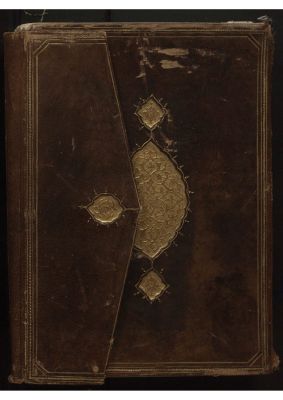
Arabic and Islamic codices from the Bodleian Library at Oxford — the Marsh, Huntington, Pococke and Laud collections built by 17th-century English Arabists, served through the Bodleian's IIIF endpoint.

1 manuscripts · 36 folios

Open the collection →
Biblioteca Apostolica Vaticana — Arabic Holdings

Biblioteca Apostolica Vaticana — Arabic Holdings

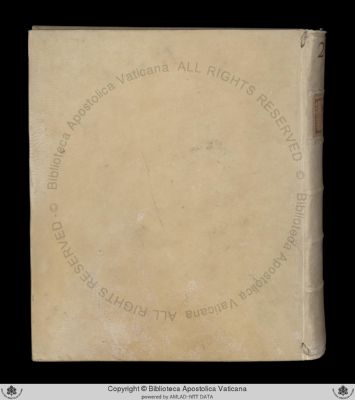
Arabic manuscripts from the Vatican Library — Vat.ar., Borg.ar. and Barb.or. shelfmarks, including Maghribī-script Qurʾāns of Spanish or North African origin.

7 manuscripts · 1,103 folios

Open the collection →
Real Biblioteca del Monasterio de El Escorial

Real Biblioteca del Monasterio de El Escorial

Arabic manuscripts from the royal library at El Escorial — among the largest single collections of Islamic codices in Europe, formed in part from the libraries of Mūlāy Zaydān of Marrakech taken by Spanish privateers in 1611.

152 manuscripts · 39,806 folios · 62 transcribed

Open the collection →

The Andalusian Qurʾān Collection

Maghribī-script Qurʾāns and Qurʾānic ancillaries — from the BNE-Gayangos shelfmarks (MSS/) and dispersed European holdings — preserving the visual tradition of Andalusi calligraphy and illumination.

0 manuscripts

Open the collection →
Printed Andalusian Books

Printed Andalusian Books

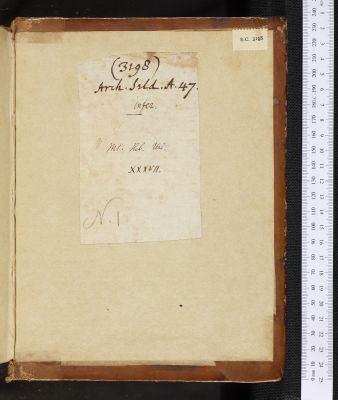
Early printed editions and modern facsimile reprints of Andalusi works, prepared by 19th- and 20th-century editors and brought into the open record via the Internet Archive, HathiTrust and the BNE.

396 manuscripts · 110,227 folios

Open the collection →
The Sacromonte Collection — An Open Dossier on the Lead Books, the Torre Turpiana Parchment & the Mute Book

The Sacromonte Collection — An Open Dossier on the Lead Books, the Torre Turpiana Parchment & the Mute Book

In 1588, workers demolishing the old minaret of Granada's main mosque — by then the city's cathedral — found a lead-lined box containing a parchment in Latin, Arabic and Castilian, a bone fragment, and a piece of cloth associated with the Virgin Mary. Seven years later, on the wooded hill that came to be called Sacromonte, treasure-seekers began unearthing twenty-two circular lead tablets engraved in a singular Arabic script. The texts presented themselves as the earliest Christian gospels, written by Arab disciples of Saint James, and they affirmed that Arabic-speaking Christians had been native to Iberia long before the Muslim conquest. The Morisco physicians Alonso del Castillo and Miguel de Luna read and translated them. Pedro de Castro y Cabeza de Vaca, Archbishop of Granada and later of Seville, defended their authenticity for thirty-three years, founded the Abadía del Sacromonte to house them, and committed his life to their cause. Many of his contemporaries — the Marqués de Estepa, Adán Centurión, the Spanish crown that twice intervened to protect them, generations of Granadan clergy and nobility — were convinced. The Holy See, after eighty-seven years of examination, issued its 1682 ruling against the texts; yet in every generation since, including our own, researchers have re-opened the question: Anastasio Kushner, Spanish, Maghrebi and international scholars have argued, with new philological, codicological and contextual evidence, that the dossier deserves a fresh reading. **This collection takes no side.** It assembles, for the first time in a single open-access library, every facet of the case — the artifacts themselves, the still-undeciphered *Libro Mudo*, the translators' working papers, the Castro and Estepa defense, the Roman process, the Inquisition records, the Maghrebi reception in al-Ḥajarī's *Nāṣir al-Dīn*, the broader Morisco world, and four centuries of scholarship in seven languages — and offers them to historians, philologists, cryptographers and codicologists worldwide. **The Libro Mudo remains unread; the truth of the affair remains contested.** This is a call for the next attempt. — *Fernando Barrejón, Curator*

740 manuscripts · 13,979 folios

Open the collection →

For researchers

If a collection is gated, the gate is not a paywall — it reflects an obligation to a partner library. To request reading access, write a short note to research@kawkav.com with your affiliation and a sentence about your project, and a curator will issue you an account. Group access for a class or a research team can be arranged the same way.

research@kawkav.com →

For institutions & private collectors

If your library, museum or private archive holds Andalusi or Maghribi material you'd like to make available to researchers under your own name, we host private and semi-private collections at no cost. Working groups around a corpus — collaborative transcription, joint cataloguing, controlled access, a viewer styled for your collection — can be set up in a few hours. Write to partnerships@kawkav.com.

partnerships@kawkav.com →